What is seitai?
A Japanese culture of the hands. A sensei works across your whole body, feeling how it connects, and helps it find its way back to order.
整体
Two characters.
Say it “say-tie”. Together the characters mean, roughly, putting the body in order. You'll often see them on the door.
- 整
- sei To put in order, to arrange.
- 体
- tai The body.
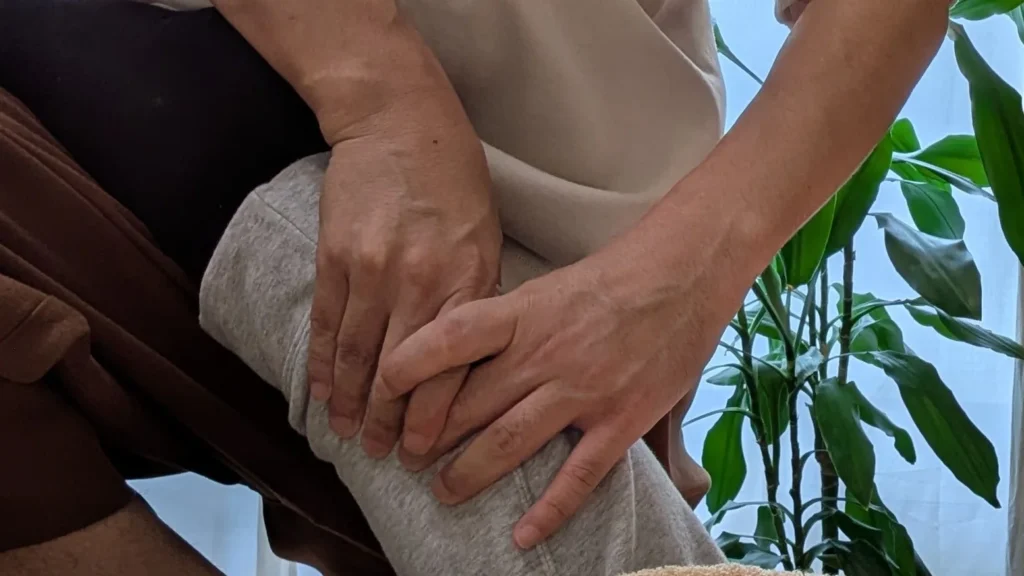
One body, not one sore spot.
You may come in with a stiff shoulder and find your sensei working on your head, your pelvis or your feet.
Ren Yajima puts it this way: stiff shoulders and back pain are the result, and the cause is usually hiding somewhere else. So a sensei looks at how the whole body works together, not only at the place that hurts.
“See the trees, and see the forest too. It's actually the shortcut.”
Akihiro Nakamura, Himeji
“Seitai can't stand on technique alone. Without character there is no trust, and without trust, you can't take someone's body into your hands.”
Tadahiro Koto

Every sensei works a little differently.
Seitai isn't one school or one technique. Here's how the six on this site work.
- Takuro NakajimaOta, Gunma
Gentle work from head to toe, to balance the whole body.
- Kazuaki KawadaKawasaki, near Tokyo
Cranial, joint and visceral adjustments. No hard kneading and no cracking of joints.
- Ren YajimaYokohama
Works through the cranium, hands and feet, pelvis, breathing, neck, shoulders and lower back, checking how the body connects.
- Kenta YamanakaNagoya
Loosening muscles and gently adjusting joints, from the head to the tips of the hands and feet.
- Akihiro NakamuraHimeji, Hyogo
Joint, cranial and muscle adjustment, working gently on twists and fascia across the whole body.
- Yoshikazu YamashitaOkayama
Fascia work combined with cranial adjustment, to ease tension and let breathing settle.
What seitai isn't.
- It isn't medical care.
- Seitai isn't a nationally licensed profession in Japan, and it doesn't replace a doctor. If you're unwell, please see a doctor first.
- It isn't a single fix.
- Koto says it plainly: seitai almost never puts everything right in one session.
- It isn't all cracking and twisting.
- You may have seen the videos. Kazuaki Kawada, Kenta Yamanaka and Akihiro Nakamura all say they don't crack joints, and what Koto teaches is cranial adjustment and gentle whole-body work.